Tuesday, May 15, 2018

Operation Cobra

Its not actually Operation Cobra.  Cobra was the inspiration along with the "Breakthrough" scenario in the Rommel rule book.


I had to make some adjustments though as I was expecting 10 players.  I designed it to have 5 commands per side.  The German commands were smaller of course.  The playing area was 5 feet by 9 feet, or 10 by 18 kilometers in game scale.

You can see the Vire river in the upper right hand corner, and no less than 8 urban centers.
Here are the Germans:
The tigers are part of the "Parent" and I allowed the CnC to distribute them as he saw fit.  A bit early for the Panzer IV L70s, but ...I just finished painting them.

Here are the Americans:
Basically an American Infantry division and Armor division.  Two 155mm batteries as "Parent" for the CnC to manage.
The Americans set-up:
The Germans set-up:
Pictures of the battle:
 Sadly, I made some mistakes.  This was judged a flanking attack, but it wasn't.
 American armored infantry and German Panzergrenadiers square off.
 Tank shock to the extreme.  Those Hellcats needed to be intermixed with the infantry.
 Panthers and Elite Panzergrenadiers take over the bockage.
The Germans played quite aggressively.  The Americans took an objective early and never let it go.  An ambitious flanking move by the Germans over the river Vire destroyed one of the American 155s.  The Germans were also threatening the American supply source at the edge of the battle field.  Carpet bombing was used to pick off German artillery units.  I really thought that wasn't historical.  The game bogged down, mostly because all of my players were new to the system.  Still everyone seemed to enjoy the game and are eager for another one.  The next one will be with only 6 players. 

I learned a lot about how to organize the Ops sheets for a multi-player game.  It will go more smoothly next time, and hopefully we will get past turn 5.
A final "endgame" picture.


Sunday, May 6, 2018

For Mercy's Sake

A couple of years ago I signed up for a couple of five kilometer runs with the goal of running them in less than 25 minutes.  The first of these was the "Stroke Awareness" run put on by Mercy medical center.  I actually broke the 25 minute barrier while training for the Stroke awareness run, and failed to "officially" break it at either of the 5k races I signed up for.

I made some training mistakes for "Stroke Awareness," and came out too fast.  It was also warm.  What I didn't mention in the initial write up here, was that when my stride tanked at the end, I got passed by two other runners making comments like - "you made a good pacer."  Grrrrrr!

Still, I like the idea of supporting local races.  I had colleagues who ran this race with me, and I was keen to see if my wife would run it with me.  She agreed, and I signed us up for it.  Sadly, none of my coworkers were able to make it.

Looking at the dates, I saw that I had 6 weeks between Hellyer and the 5k.  That gave me time for the required 2 weeks of easy running, followed by 4 weeks of training.  I found a 4 week training program here, but I forgot about it and used "Run Less, Run Faster," focusing on the last 4 weeks of the training program.  I did not run the day before the race, nuh-uh, never making that mistake again.

My initial plan was to try and break a 24 minute 5k.  I had run a 24:12 during the Hellyer training, and I thought that was a reasonable goal.  One training stipulation I made, one that I plan to attempt for all future training, was that hill-sprints come first.  That is, every time I weight lift (Monday, Wednesday, Friday), I do 6-10 hill sprints on the treadmill.  The rest of my training must fit around that.  

However, training did not seem to be going well.  I was not keeping the paces suggested by the book.  Holding a sub-8 for anything, at least initially appeared to be beyond my ability.  I did find this sort of strange pattern though with my tempo running.  I would start running a 8 to 8:10 pace, but then would go into this sort of trance for the last mile and a half and run 7:30-7:40.

One thing I'm not mentioning.  I had planned on taking a semester break from half-marathons.  This Fall, rather than run the Monterey half, I decided I would train with the purpose of running a 5k.  You know, totally commit, and see what I could really do at this shorter distance.  I thought by taking a training session and committing to speed, I might find a place where I ran an even faster half-marathon.  My target for my next half-marthon PR, breaking 1 hour and 43 minutes, would be the very flat Modesto run.  I thought I would break 24 minutes for a 5k at "Stroke Awareness," and 23 minutes for the Fall, committing to a full training session for a 5 kilometers race.

Sooooo, with the training not going so well, I reassessed, and decided to "officially" break the 25 minute mark at "Stroke Awareness," if I should be so lucky, and shoot for breaking the 24 minute mark in the Fall.

The day of the race arrives.  I don't wear my watch.  My wife and I have our morning coffee before driving to Merced.  We arrive with ample time for package pick-up, restroom breaks, taking package pick-up back to the car (me jogging back), and warm-up (me jogging there and back, plus  a bit of the race loop).  I get bit by mosquitoes, and forget to get a drink of water before the race.

It was warm.  I moseyed up to the front pack.  A former student came up to say "hi."  That was nice.  I saw a guy in my age group who is much faster than I - he runs in the 6 minute mile range.  The race was delayed for a final shuttle  from the parking lot - really? A shuttle bus to a race?  Then the horn sounded and we were off.

I remembered not to start too hard.  I went with the "breath hard, and don't give up" strategy, hoping to hold a little reserve for the end so that nobody tells me what a "great pacer" I was.  I didn't feel fast.  It felt like 8s.  I passed somebody I see running out on the canal during my training runs.  I passed, got passed.  I found a good pacing group - basically 2 people.  I tried to pass one and backed off because I could tell it was costing me too much.  The other one stopped to walk - game over.  I did not tell them how great a pacer they were.

That last bit hurt.  They had a water break (really? for a 5k?).  I was tempted, particularly because I forgot that pre-race water. Did I mention it was warm?  I pushed on, and near the end really felt like I might puke.  Then I heard the crowds.  I knew I was close.  I turned the corner and the clock on the finish line about a 50 yards away said  22 <blurry>.  I dug deep, half in shock and managed to cross the finish line in 22 minutes 55 seconds.  Nobody passed me in that final sprint.  I had held a 7:23 pace average which is better than my fricking current 1 mile best on Garmin Connect.

I took pictures of my wife finishing her first 5k, fourth in her age group.  I saw another student come in.  That was nice.

I finished fourth in my age group of 40-59!  40-59? Are you kidding me?  If it was the more typical 50-54, I would have won my age group.  As it was two guys older than me, and one in his 40s beat me.  Fortunately, the next 5k will have the usual 5 year age group splits.  It will probably have a lot more people though.

Anyway, I'm thrilled. I never expected to do so well.  I took away my Fall goal, even according to the original plan.  

I truly think hill sprints were the key.  Yes, they probably reduced my speed on the traditional intervals, and tempo runs - fooling me to think my training was going poorly.  Nevertheless, they left me in a state of fitness that allowed me to capitalize on this race.  My hill sprints start at 6% grade, go to an 8% grade, and range from 9 miles per hour to 9.8 miles per hour during my last one.  My hypotheses is that I am training my cerebellum to run ~6 minute paces, while strengthening my legs for more explosive running.  I think the cerebellum aspect is the much underappreciated part of this training, but the leg strength, and protection from injury are no less important.

I recently picked up a new running book, 80/20 by Matt Fitzgerald.  He is another big advocate for bulking up miles.  I haven't hit a 60 mile week in a long time.  He also presents a plan for a 3 week training cycle, where the 60 mile week would be maximum, and would include a 54 mile week and 45 mile recovery week.  I will prioritize this plan with hill sprints mixed in.  Several of the 80/20 plans call for twice-a-day running.  My second run will be on low mileage days, during weight lifting, and doing hill....

Dare I hope to break the 22 minute barrier in Fall?  That seems like too much of an improvement for the time frame and this distance.  Hmmm, I need to go run some hill...

Sunday, April 22, 2018

Operation Luttich with Rommel

A little less than a year ago I put on Operation Luttich using a modified Field of Battles: WW2.
It was huge, and it bogged down badly.  I blame me partly for putting too much terrain on the table, but I also wanted to try and streamline the rules to allow for a faster play game.  Then Rommel by Sam Mustafa came out.  I gave them a test drive with a couple of generic scenarios and then put them away.  Over the last couple of weeks I've been working my way solo through one interpretation of operation Luttich based on that game last year.  Here are some photos and after action report.

The German side with three elements representing the 1st SS, 2nd SS, and 2nd Panzer divisions.  I should have made the Panzergrenadier battalions elite - boo boo number one.  One of the German elements didn't have artillery, but the parent unit had two Nebelwerfers.  Sadly they started out too far away to help with the assault in the beginning.


The American side


Combat Command B of the 3rd Armor plus the 119th regiment of the 30th infantry in reserve.

The scenario was set for 16 turns.  No American air power was allowed for the first 4 turns to simulate the fog that started this battle.  The Americans rolled a d6 until they rolled less than the turn number for their reinforcements.  They joined the battle in the nick of time.

Initial assault of hill 314.  I gave hill 314 and hill 285 three prepared position markers to make them tougher to take.  The Germans never made it to hill 285, focusing their assault on 314.

The abbey got their attention also.
 Flanking around St. Barthelemy
 Unoccupied Romagny is occupied by the Germans.
 Another attempt at hill 314.
Americans counterattack to protect their vulnerable artillery.  I'm using my usual "unloaded" markers to indicate "tipped" units, or as I like to call them - "spent."  For road movement I used my truck stands to indicate units were spent.  The spent units had to be touching the truck stand.


Overall German position.  They have Mortain and Romagny.  I set the victory conditions to whoever held 3 of the 5 urban areas.  The Germans could hope for little more.  In the upper right you can see them trying to flank the American positions and again get at those vulnerable artillery plus the undefended Juvighny.  It almost worked.

Then American reinforcements arrived.


Hill 314 fell!

Saint Barthelemy also fell, but was quickly retaken.
The Abbey fell.

American artillery made the Germans pay a heavy price for this.  I made all American artillery "Parent," meaning they could support any unit without penalty.
 The Americans counter attack with just 2 tank companies into a town.  They need a 3 or better to inflict the two hits necessary to eliminate the badly battered German companies.  With the help of two airstrikes and artillery they succeed.
 The Germans desperate to retake the one town they need for victory.  We were in overtime, and the game could end at the end of any of these turns.
 They don't succeed.  Some end game pictures showing final positions.  The German flanking force coming back over the bridge.  All rivers were treated as "soft ground." The bridge space could be left without being spent if you left into either of the squares the bridge was facing.  Reading about the terrain around Mortain, this was an issue for armor in particular.  Hmmm, that could be another special rule.  Only have soft ground effect armor.
 You can see on the left that the Screaming Mimis moved up.  They really made a difference for the Germans.


My second big error was allowing the american armor and armored infantry to move two spaces to retake Barthelemy.  Since the second square was urban, this shouldn't have been allowed.  I might have done this earlier in the game for the Germans too.  It might have significantly effected the outcome.  Oh well, I'll do better next time for my multiplayer mash up featuring an American armored division and infantry division versus some German Panzer and Panzergrenadier divisions.  It could have up to 10 players on a 5 by 9 foot table - oh my!


Saturday, March 31, 2018

What to have with this bread?

I made a loaf with my wild dough starter.

What should I make to go with it?  How about a terrine.
Pork liver and trimmings cut up.

Time to grind it up.


 Need some veggies to fold in.

After grinding, time for blending the meat into one mass using the food processor.

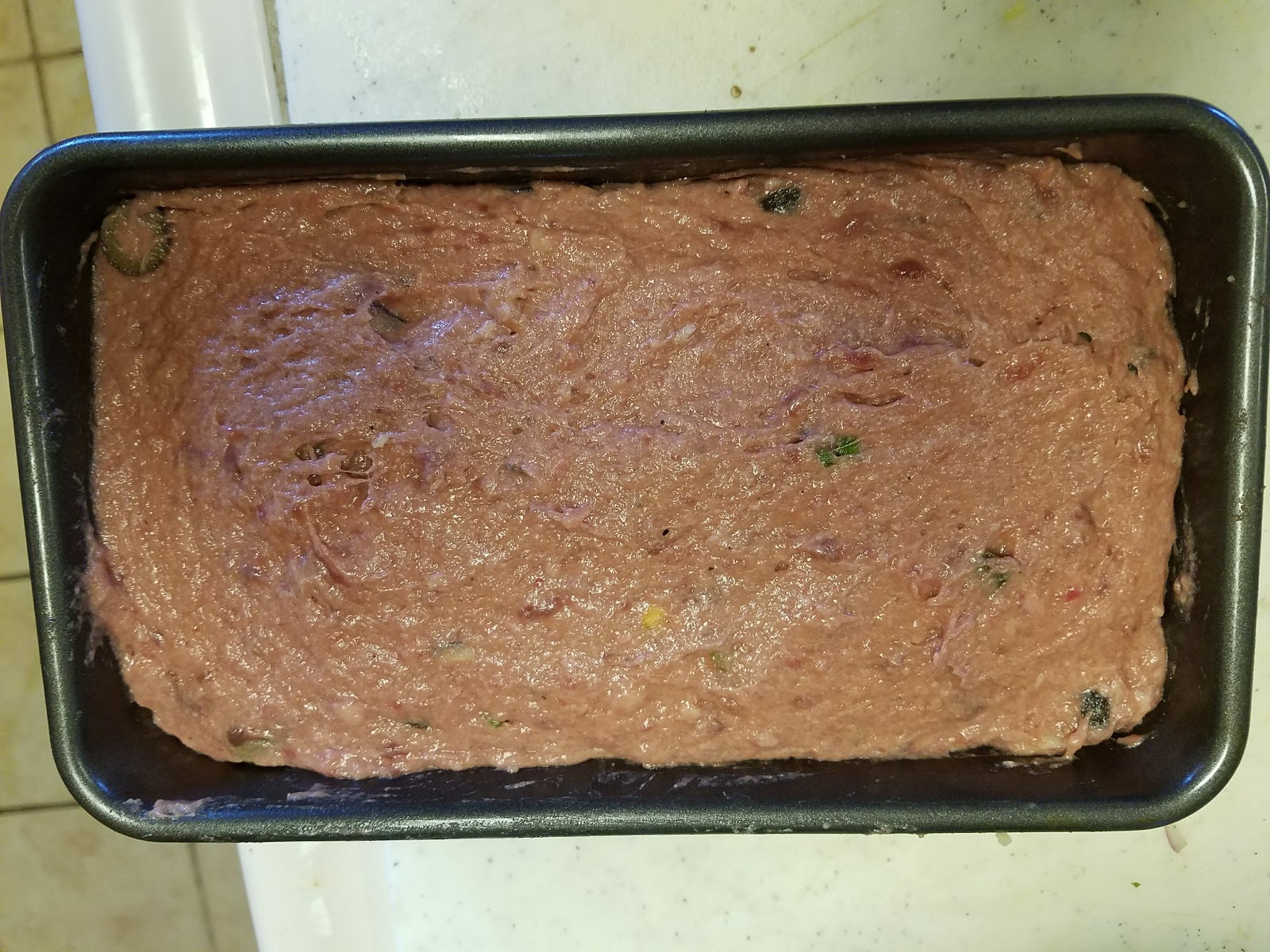
 Fold in above veggies and then put into pan.

How about some brussel sprouts to go with that?

 Look at the crumb on that bread!

Progress on projects

Time for a PoP report!

I posted a little something on Magic Wash.  Here is the final product.


With the Egyptians and Hittites finally finished, I turn my attention to the Romans and Carthaginians.


I finally got my M7 priest painted to complete my U.S. 1944 armored division.


Almost done with the Hellcats, coming up soon...

Ngorongoro

 The capstone of our visit was the Ngorongoro crater safari. On our way to the crater from Ndutu, I got this picture and the Oldovai gorge r...